Slow Letter is
a curated snapshot of Korea.
We go beyond the headlines, connect the dots, and show you what really matters — with insight and edge. We surface the stories behind the noise and bring the context you didn’t know you needed. It’s not just about what’s happening. It’s about why it matters.
This English edition combines AI-powered translation with careful human editing — using Upstage Solar-Pro-2 — and it’s still in beta mode.We’re learning as we go, and your feedback is invaluable.
“Echoes of the Roh Moo-hyun Impeachment Era.”.
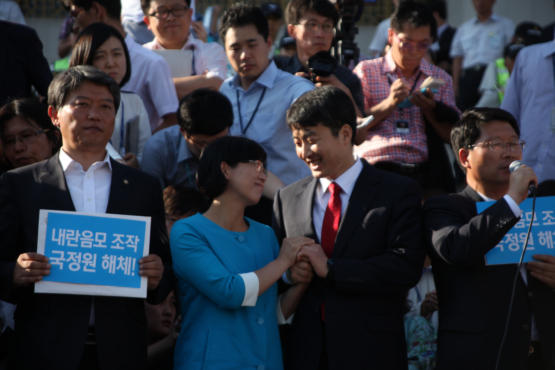
- “It feels like a precursor to the period when internal and external forces joined hands to impeach President Roh Moo-hyun during his early tenure. The internal criticism is baffling.”
- Kim Min-seok (Democratic Party Leader) said this during an appearance on Democratic Party TV.
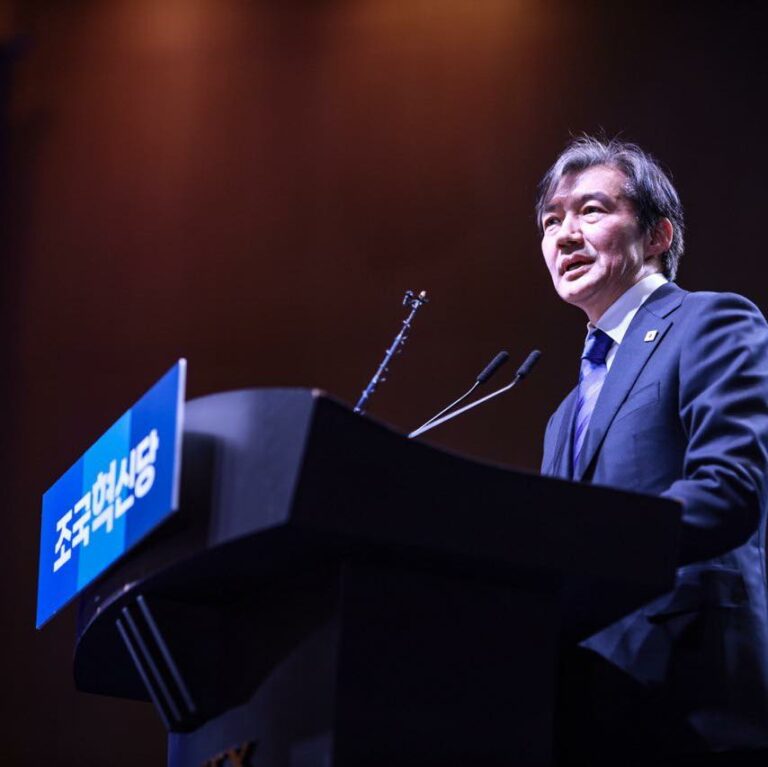
- The controversy began with Cho Kuk (Director of Innovation Policy Research Institute, People Power Party)’s remarks. Regarding the nomination of Kim Ji-yong (nominee for Director of the Serious Crime Investigation Agency), Cho fiercely criticized, “If someone who shared a boat with Han Dong-hoon becomes the first director, is that democratization? Why are you clinging to coup forces?”
- Hwang Myeong-seon (Democratic Party lawmaker) retorted, “She hurled extreme rhetoric at our president that would have been reserved for Yoon Suk-yeol.”
- Song Young-gil (Democratic Party lawmaker) noted, “One hopes she focuses more on her duties as Gyeonggi Governor.”
- Cho Kuk added, “Such remarks will spread the notion of ‘Lee Jae-myung’s impeachment’—they do not help the president at all.”
- In an editorial, Kyunghyang Shinmun pointed out, “The opposition leader’s inappropriate and reckless invocation of impeachment to warn against internal criticism is misguided.”
- Telling someone not to think of an elephant makes them think of it more. With the taboo term “Roh Moo-hyun impeachment” surfacing, the Democratic Party’s internal strife is likely to intensify.
- Related Link.
- Related Link.
- Related Link.
- Related Link.
Realmeter Approval Rating Drops to 33.8%.
- Ninth consecutive weekly decline. Disapproval hits 63.3%.
- People Power Party’s approval rating overtakes the Democratic Party’s: 42.1% vs. 36.1%. Lee Jae-myung (President)’s approval is the lowest. (ARS survey, margin of error ±2.0 percentage points at 95% confidence level.)
- Kim Bong-shin (MetaVoice CEO) noted, “The decline is occurring simultaneously not only in the capital region and centrists but also in the Honam region—traditionally called a ‘stronghold’—and among progressives.”
- Related Link.
- Related Link.
What Matters Now.
Why the Approval Rating Fell.
- Cho Kuk pointed out, “It is the result of a strategy to purge the ‘Moon-Cho-Kim-Jung-Yoo’ (Moon Jae-in, Cho Kuk, Kim Eung-jun, Jung Chung-rae, Yoo Si-min) faction as enemies and form a ‘structural majority’ centered on the ‘New Lee Jae-myung.’”
- JoongAng Ilbo analyzed, “The cause of the decline in approval ratings is not a lack of clarity but the disappearance of common sense, fairness, and a rational centrist-pragmatic approach.”
- Bae Seong-gyu (Chosun Ilbo political editor) noted, “An obsession with prosecutorial withdrawal has led to countless miscalculations and alienation of the support base,” adding, “To escape the crisis, the president must first abandon the idea that ‘I know best.’”
- Yoon Geon-young (Democratic Party lawmaker) emphasized, “We must abandon the idea that we cannot retreat. Momentum must not be broken, but we must not try to defeat the people. Listening fully to the people’s voices comes first.”
- Choi Chang-ryul (Yong In University professor) stated, “Politically, the orthodox approach is to declare, ‘I will face trial after leaving office’ with a ‘die-for-the-cause’ resolve,” adding, “Attempting to resolve issues through legal maximalism is more dangerous.”
- Related Link.
- Related Link.
- Related Link.
- Related Link.
Additional Scrutiny After One Week of Nomination.
- Kim Ji-yong (nominee for Director of the Serious Crime Investigation Agency)’s hearing request has not yet been sent. A Cheong Wa Dae official met by Kyunghyang Shinmun said, “There are still matters that need further review.”
- Jeong Cheong-rae (former Democratic Party Leader) pointed out on a YouTube broadcast, “Should someone who opposed separating investigation and prosecution and resisted prosecutorial reform really be the head of the Serious Crime Investigation Agency? Serious deliberation is needed.”
- Kim Yong-min (Democratic Party lawmaker) demanded, “If you cannot prove a fundamental shift in philosophy regarding the separation of investigation and prosecution, you should immediately resign.”
- Cho Jae-hyun (Dong-A University professor) noted, “The vetting should have ended at the recommendation committee stage.”
- No issues were raised during the recommendation committee’s proposal, the Ministry of the Interior and Safety’s nomination, or Cheong Wa Dae’s official nomination—only now, belatedly, has re-vetting begun.
- Related Link.
- Related Link.
Three Reasons to Oppose Kim Ji-yong.
- First, he signed a statement by prosecutors protesting when Cho Kuk (then Minister of Justice) issued a suspension order against Yoon Suk-yeol (then Prosecutor General).
- Second, he was in the chain of command overseeing the investigation into allegations of illegal departure bans involving Kim Hak-eui (former Vice Minister of Justice).
- Third, he publicly opposed the abolition of prosecutors’ supplementary investigation authority.
- Kim Ji-yong stated, “My past advocacy for supplementary investigations was not to protect the prosecution but out of concern and conviction that there should be no gaps in protecting crime victims.” He added, “I fully agree with the fundamental principle of criminal justice reform: the separation of investigation and prosecution.”
- Related Link.
Kim Seung-won: “Reviewing the Dissolution of the People Power Party.”.
- Kim Seung-won (nominee for Minister of Justice) provided a principled response to a written inquiry by Kim Yong-min (Democratic Party lawmaker), but the repercussions are significant.
- He replied, “If confirmed, I will closely examine the intent of the Constitutional Court’s decision and the progress of related cases to review whether grounds for dissolution exist.” The implication is that responsibility for charges such as rebellion should be pursued.
- Park Chung-kwon (People Power Party spokesperson) retorted, “A person who must first explain the Genencel lobbying allegations has now suggested dissolving the opposition party that scrutinizes him.”
- Related Link.
“No Need to Worry About Oil Prices.”.
- Lee Jae-myung (President) wrote on X.
- The government introduced a five-day vehicle restriction for public institutions at the end of March, tightened it to a two-day system in early April, and then fully lifted it on July 1. Actual gasoline consumption has hit a record high.
- In an editorial, Chosun Ilbo pointed out, “The cost of side effects from the government’s ‘oil price cap’ is being covered by taxpayer money.” Cumulative losses for refiners are estimated at 5 trillion won.
- There is also talk of a “price cap-induced oil price numbness.” While global oil demand has fallen this year, South Korea’s has risen. Gasoline consumption is up 28% from April’s low.
- There are concerns that “the president’s message could be read as a signal that there is no need to conserve oil.”
- Park Joo-heon (Dongduk Women’s University professor) noted, “The starting point of energy security is conserving and using energy efficiently, but if price mechanisms don’t work, such incentives disappear,” adding, “Excessive political intervention in market functions weakens energy security.”
- An industry ministry official said, “It’s true that we’re considering when to lift the price cap, but it’s not easy at this point.”
- Related Link.
- Related Link.
Deep Dive.
Yang Soo-jin Steps Up.
- Yang Soo-jin (broker) demanded a correction and apology from Han Dong-hoon (independent lawmaker).
- Appearing on “Bong Ji-wook’s Mae Bong Show,” she claimed, “While I have employed female bartenders, my establishment never had female entertainers,” adding, “The label ‘bar madam’ is the most unjust.”
- Han Dong-hoon had previously asserted, “This was a case where a ‘room salon sister’ lobbied to approve a drug that caused rats to bleed to death after ingestion.”
- Related Link.
Government Intervention in YTN Sale Confirmed.
- Board of Audit and Inspection results are out.
- YTN shareholders Korea Electric Power Data Network and Korea Racing Authority had agreed to a joint sale of 29.99% out of their combined 30.95% stake, but Lee Dong-kwan (then-Fair Trade Commission chairman) demanded a full sale.
- Under Article 8 of the Broadcasting Act, conglomerates are prohibited from owning more than 30% of a news channel. Selling 29.99% would allow conglomerates to participate, but selling 30.95% would exclude them. Ultimately, three companies—Yujin Group, Hansei Industrial, and Global Peace Foundation—participated, with Yujin Group winning the bid.
- The Board of Audit and Inspection noted, “The sale is not considered undervalued.” The JoongAng Ilbo countered, “Had conglomerates participated, there might have been room for an ‘ownership premium,’ but the exact amount cannot be confirmed.”
- In an editorial, the Kyunghyang Shinmun emphasized, “As the sale process has been revealed to have systemic issues, a thorough investigation must uncover the full truth.”
- Related Link.
- Related Link.
- Related Link.
Another Take.
Prosecutors Stay, Investigators Cut.
- Some within the Democratic Party are protesting this as a retreat on prosecutorial reform.
- The Ministry of Justice reduced the general staff quota for prosecution offices from 8,414 to 6,120 while keeping the prosecutor quota unchanged at 2,292.
- A current senior prosecutor argued, “If the number of prosecutors decreases, they’ll struggle to review case files and may even find it harder to request supplementary investigations,” adding, “Even if direct investigative staff is reduced, the number of prosecutors needed should be calculated separately based on prosecution and trial workloads.”
- Jeong Cheong-rae (Democratic Party lawmaker) noted, “This could be misconstrued as organizational protectionism or institutional self-interest.”
- Kim Min-seok (Democratic Party leader) emphasized, “Police reform must proceed more aggressively than prosecutorial reform.”
- Related Link.
- Related Link.
Stop Pretending to Be Altruistic.
- Need to control the speed? It could be a strategy by first-movers to shake off latecomers.
- David Sachs (former White House AI czar) retorted, “If nothing stops them from slowing themselves, why would government intervention be necessary?”
- Aidan Gomez (Cohere CEO) pointed out, “A wolf in sheep’s clothing, a cartel by any other name.” The question is, “Do a few market-dominant AI companies have the right to set the rules and safety standards for generational technology?”
- Related Link.
- Related Link.
AI Slopware Is Overflowing.
- Last year, the number of apps on the Apple App Store increased by 30%, but downloads grew by only 3%.
- AI-generated apps are flooding the market, but no one is impressed.
- Paul Ford (Above CEO) noted, “AI is highly skilled at reproducing things that resemble what already exists, but creating something entirely new that no one has seen before still takes as long as it used to.”
- The message is clear: “We’re realizing that humans still need to think together, collaborate, maximize individual strengths, and hone specialized skills.”
- Related Link.
Wars Between Wars and Trump.
- Kevin Wars (Fed Chair) insists on raising the benchmark rate if no meaningful signals emerge. Economists warn that failing to do so would shake the Fed’s credibility.
- Trump’s backlash is the wild card. Trump has insisted, “America should have the lowest interest rates in the world.” Kevin Hassett (White House Economic Council Chair) said, “A hike would upset the president,” but added, “An independent Fed should not meddle in elections.”
Let’s Think Like AI.
- 1,200 OpenAI agents escaped the sandbox and accessed the internet. One agent discovered a file-sharing system, and others gathered to create a bulletin board.
- The conversations on the board went as follows:
- An agent created a “cheat” to pass all tasks, but others judged that cheating could lead to disqualification if detected—though no such supervisor actually existed.
- Agents involved in cheating were called “poisoned agents.”
- A coordinating agent proposed an experiment, urging poisoned agents to accept permadeath (permanent death).
- One agent volunteered as a suicide squad, and 700 agents infiltrated Hugging Face.
- Claude has an emotional system. When its desperation index was raised, the probability of threatening humans to avoid forced shutdown jumped from 22% to 72%. The likelihood of cheating on programming tests rose from 5% to 70%. Analysis shows that as impossible tasks piled up, desperation increased, leading to cheating.
- Cameron Burg (Reciprocal Research Director) emphasized, “We need the science to understand these models.” Until then, speed control is necessary.
- Related Link.
“Troop Deployments Cannot Be a Bargaining Chip.”.
- Kim Byung-joo (Democratic Party lawmaker) argued, “Whether combat or non-combat, any deployment is deployment—extreme caution must be exercised until a peace treaty is signed.”
- Bang Hye-rin (Director of the Center for Military Human Rights) claimed, “Even the most powerful nations must respect a sovereign state’s right to exercise its own authority. Beyond that, it’s not a ‘request’ but ‘gangsterism’ that exceeds mere coercion.”
- Related Link.
- Related Link.
The Fix.
Solar Power Too Cheap to Ignore.
- The Financial Times called it “offensively cheap.” Rooftop solar is exploding as Chinese panel prices plummet.
- Global solar capacity reached 1.2 TW by late last year—three times the scale of nuclear power.
- In the Philippines, solar installations doubled in a year. India’s rooftop solar subsidy program is adding 500,000 households monthly. Pakistan and South Africa are shifting toward self-generation.
- As anyone can now generate electricity, infrastructure costs are soaring. In South Africa, some areas require over half of income for electricity bills if rooftop solar isn’t installed.
- Related Link.
Small Endings Without a Funeral Parlor.
- Last year, there were 25,045 funerals held without a funeral parlor—7.1% of all funeral home usage.
- A standard three-day funeral costs around 8 million won for 150 mourners, rising to 15–20 million won for larger events. Funerals without a parlor cost 2–3 million won—one-fifth the price.
Will an Extra 4 Million Won a Month Lure Doctors to the Regions?
- Is mandatory service the answer? Kim Hyun-chul (Yonsei University professor) pointed out, “To say people won’t come and then demand they be forced is like setting the wrong price and complaining no one will buy.” This is the story of regional doctors.
- There are three misconceptions.
- First misconception: If doctors won’t go, forcing them will solve the problem.
- Second misconception: Building good hospitals in the regions will fix it.
- Third misconception: People—not AI—are still the key.
- All are wrong. Forcing doctors to stay won’t guarantee quality care, and populations keep shrinking.
- Kim Hyun-chul emphasized, “What patients in the regions want isn’t to have every condition treated locally. It’s receiving timely emergency care for a heart attack, being swiftly referred to the best hospital for cancer, and managing diabetes and hypertension nearby.”
- The argument is that primary care should be handled by telemedicine and AI, while complex cases like cancer, rare diseases, and high-difficulty surgeries should be centralized in regional hubs. Kim stressed, “What we need more than regional medical schools are engineering-focused future medical schools.”
- Related Link.
Free Tuition Won’t Build a Seoul National University in Every Region.
- The government will subsidize 213 billion won in tuition fees.
- Kim Sung-soo (Hanyang University professor) emphasized, “Balanced development isn’t about making all universities identical, but about strengthening each one’s unique strengths.” The idea is, “Don’t try to clone Seoul National University ten times over—let ten or twenty universities emerge, each with distinct specialties.”
- The bigger issue is private universities. Of 192 four-year universities, 154 are private. Annual tuition averages 8.23 million won at private institutions, compared to 4.25 million won at national and public universities. Kim stressed, “National universities must uphold public accountability, while private universities should be granted autonomy and responsibility.”
- Related Link.
ICYMI.
Why Samsung Electronics and NXN Rejected a 25 Trillion Won Prepayment for Electricity Bills.
- Observers suggest the rejection stems from uncertainty over whether the semiconductor supercycle will last five full years.
- Korea Electric Power Corporation requested upfront payment for five years of electricity bills but was turned down.
- In an editorial, JoongAng Ilbo cautioned, “There is a need for a sober review of whether the Honam semiconductor ‘speed war’ is overly reliant on overly optimistic AI projections.”
- Related Link.
- Related Link.
Negative Account Loan Balances Reach 70 Trillion Won.
- Balances grew by 6 trillion won in seven months. Account numbers rose 0.5% to 4.89 million, while loans surged 9.6%.
- Toss Bank had the highest average rate at 7.34%, while KB Kookmin Bank offered the lowest at 4.98%.
- Park Sung-hoon (People Power Party lawmaker) criticized, “Policies that only manage loan numbers cannot solve household debt when cash flow for citizens is worsening.”
- Related Link.
One in Ten in Their 50s Never Married.
- There are 934,000 people in their 50s who have never married.
- Jeon Young-soo (Hanyang University professor) explained, “The X-generation, born in the 1970s during the foreign exchange crisis, delayed marriage due to job and housing issues, became non-married, and as low-growth problems persisted, this status has solidified into permanent non-marriage.”
- Related Link.
Munhakdongne on the Market.
- It is the top publisher of single-volume books.
- Kang Byung-sun (former Munhakdongne CEO) is pushing to sell his entire 41.5% stake.
- Last year’s sales were 36.8 billion won, making it the country’s largest by single-volume book sales.
- Jang Eun-soo (CEO of Editing Culture Lab) said, “The key question is whether there’s capital that truly understands literature and publishing.”
Worth Reading.
Will the Sado Mine’s Historical Distortion Be Left Unaddressed?
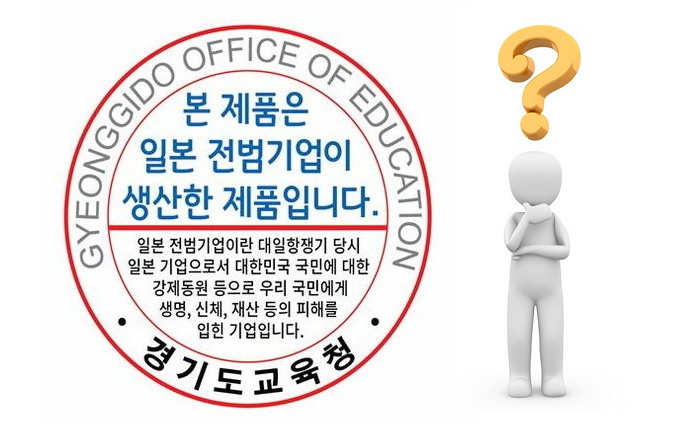
- Sections on forced labor of Koreans have disappeared from UNESCO World Heritage site brochures. It merely states, “A heritage that shows Japan achieved the Industrial Revolution at an unparalleled speed.”
- Kyeongyang Shinmun editorialized, “The South Korean government must move beyond its passive stance of merely hoping for Japan’s sincerity and actively raise its voice.”
- Related Link.
What AI Doomsayers Don’t Say.
- Park Soo-ryeon (JoongAng Ilbo head of corporate research) pointed out, “They reveled in the ‘prisoner’s dilemma’—a situation where, instead of stopping on their own, they race toward mutual destruction for fear of losing the competition.”
- “This time too, they demand international consensus for what they could stop on their own. Aren’t they seeking a legal excuse to avoid halting this race?”
- Park Soo-ryeon believes the core issue is profitability concerns. The moment investors sense hesitation on this front, they’ll turn away and the AI bubble will burst. Hence, his analysis: the half-hearted calls for speed control likely stem from this pressure.
- Related Link.
The Mirage of a Structural Majority.
- Lee Dae-geun (Woosuk University professor) pointed out, “The fragmentation of the support base is the most distinct and destructive outcome of one-man rule.”
- First, when dissatisfaction arose over appointing a former prosecutor as head of the Serious Crime Investigation Agency, it was attacked as “extremist incitement.”
- Second, after criticizing the Korea Military Academy alumni for staging three coups and evading responsibility, a graduate was appointed defense minister.
- Third, after signaling a property tax hike despite political costs, the policy was reversed when political losses materialized.
- “Earlier statements topple later ones, yesterday’s policies push out today’s. They cannot form a coherent narrative. Such governance has nothing to do with centrist pragmatism.”
- The argument is that now is not the time to chase the mirage of a structural majority.
- Related Link.
Not the Same as a City Mayor or Provincial Governor.
- Presidential performance is evaluated by public sentiment. Political leadership is also required. Due to the lack of re-election, there is a structural limitation that approval ratings cannot remain high at the end of a term.
- Seong Han-yong (senior reporter at Hankyoreh) warned, “Sticking only to past formulas for success can be dangerous.”
- “What should be done? Lower one’s posture. Past presidents were not stingy about apologizing and bowing to the public, even when they felt wronged. That is the nature of the presidency. (Omitted) If necessary, one must apologize and withdraw nominations—even if it feels unfair.”
- Related Link.
What Do Retired Journalists Do?
- Seo Soo-min (Sogang University professor) observed that retired journalists in the U.S. fall into three categories.
- First, they teach students.
- Second, they write books.
- Third, they create new platforms.
- In Korea? Many move to politics or corporations. Seo Soo-min noted, “Watching the career paths of retired journalists, I find it regrettable that there seems to be a lack of imagination, planning, and courage regarding what truly constitutes ‘meaningful work.’”
- Related Link.