Slow Letter is
a curated snapshot of Korea.
We go beyond the headlines, connect the dots, and show you what really matters — with insight and edge. We surface the stories behind the noise and bring the context you didn’t know you needed. It’s not just about what’s happening. It’s about why it matters.
This English edition combines AI-powered translation with careful human editing — using Upstage Solar-Pro-2 — and it’s still in beta mode.We’re learning as we go, and your feedback is invaluable.
U.S.-Iran Ceasefire Extension Agreement.
- Donald Trump (U.S. President) posted on Truth Social: “Negotiations with Iran are now concluded. Ships of the World, start your engines. Let the oil flow!”
- It has been 106 days since the outbreak of conflict on February 28. The post appeared at 5:29 PM Eastern Time on the 14th.
- Three key points: First, extend the ceasefire by 60 days. Second, reopen the Strait of Hormuz. Third, begin nuclear program negotiations.
- They also agreed to unfreeze Iran’s overseas assets. Observers suggest $12 billion of the $24 billion will be released first, with the remainder phased over 60 days.
- The agreement was finalized via video conference and electronic signatures. Analysis suggests Trump rushed to meet his 80th birthday on the 14th.
- Oil prices plummeted as news of the deal emerged.
- Related Link.
- Related Link.
What Matters Now.
“The Ruling Party’s Passion Must Serve the Entire Nation.”.
- Lee Jae-myung (President), currently visiting Italy, strongly criticized Song Young-gil (Democratic Party Leader) on X.
- “The ruling party must demonstrate the ability to take responsibility, deliver results, and embrace unity with the power entrusted to it,” he emphasized, adding, “While not abandoning its convictions, the ruling party should focus more on the ‘language of responsibility’ than the rhetoric of ideology.”
- “Rather than confrontation and exclusion, it must act as a ‘larger vessel’—mediating conflicts and minimizing backlash through constant communication,” he noted. “If unavoidable ruptures occur, empathy and consideration for those affected must not be forgotten.”
What Will Cheong-rae Jeong Choose?
- “If Cheong-rae Jeong seeks re-election, conflicts between the party and the administration could intensify from the government’s second year,” a ruling party official told JoongAng Ilbo. “Jae-myung Lee is likely sensitive to this.”
- A Democratic Party lawmaker said, “If Cheong-rae Jeong runs, it will inevitably appear as if he’s ‘challenging head-on.’” Another lawmaker added, “If he suddenly declines to run, it’ll look like he’s being pushed out. There’s also a sense of crisis that he might not get another political opportunity before the next presidential election.”
- Cheong-rae Jeong’s remark, “The people are eternal, but administrations are short,” sparked comments among Blue House aides: “Is this a declaration to split the party?”
- Yong-woo Lee (Democratic Party lawmaker) drew a line: “It’s regrettable, but we hope the leadership will no longer burden the government.”
- Seung-rae Cho (Democratic Party Secretary-General) interpreted President Yoon’s message as “emphasizing the ruling party’s responsibility for how it approaches governance after local elections.” He clarified it was not aimed at Cheong-rae Jeong—Lee has not directly mentioned him.
- Cheong-rae Jeong’s allies complain of “blatant interference in party affairs.” A pro-Jeong figure said, “The Seoul mayoral defeat was not entirely the party leadership’s fault—it was also the president and government’s responsibility—but they’re shifting blame.”
- Related Link.
- Related Link.
- Related Link.
Prosecutors’ Supplementary Investigative Authority: A Wildcard.
- Cheong-rae Jeong (Democratic Party) insists it should be abolished entirely.
- Jae-myung Lee (President) has not specified his stance, but observers suggest he leans toward allowing exceptions. At a press conference last week, he said, “Rather than the government clinging to a specific position, it would be preferable to hand it over to the National Assembly for thorough discussion.”
- A Democratic Party lawmaker remarked, “The president asked for discussion, but the party leader unilaterally declared for full abolition,” adding, “If one side dictates the position, what role does the president have?”
Pyongyang Drone Deployment, Yoon Seok-yeol Sentenced to 30 Years.
- This is separate from the rebellion leader trial. In the general treason trial of Yoon Seok-yeol (former president), the court sentenced him to 30 years in prison.
- The court ruled, “He used the Republic of Korea’s military power for personal purposes” and “induced North Korean provocations under the guise of operations.” It noted, “This cannot be considered a legitimate military operation under self-defense rights.”
- Kim Yong-hyun (then Minister of National Defense) and Yeo In-hyeong (then Commander of the Defense Security Command) were sentenced to 30 and 15 years, respectively.
Martial Law Preparations Began Three Months Ago.
- Sentences could also increase in the rebellion leader case. This is not merely about sending drones to North Korea. The court ruled, “This was an operation to create conditions for martial law,” adding, “They deliberately attempted to fabricate an emergency to justify declaring martial law.”
- It emphasized, “Had the Joint Chiefs of Staff not responded passively—suspecting Kim Yong-hyun’s intentions—it cannot be ruled out that this would have escalated into armed conflict.”
- In the rebellion leader case, the court determined the conspiracy began on December 1, 2024. However, in the general treason case, it was judged to have started around September 2024.
- Yeo In-hyeong’s notes confirmed statements such as, “We must create or seize unstable situations.”
- Related Link.
8123.62.
- Last Friday, the KOSPI was again lifted by Samsung Electronics and Nix. They rose 7.9% and 2.3%, respectively.
- Foreign investors net-purchased ₩2.1 trillion worth, while individual investors net-sold ₩4.3 trillion worth.
- Stock prices are likely to gain upward momentum following the peace declaration.
Deep Dive.
SpaceX Market Cap Hits $2.1 Trillion.
- It surged to 6th in market cap on its first day of listing. Starting at $135, it soared over 19%.
- Elon Musk (SpaceX CEO)’s wealth has exceeded $1 trillion—making him the first trillionaire in human history.
- It’s become such a money black hole that even the crash of gold and Bitcoin is being called the SpaceX effect.
- Michael Burry (investment analyst) downgraded it, saying, “Nowhere in the IPO filing is there support for a $1 trillion valuation, let alone $2 trillion.”
Why the Monster AI Was Blocked After Three Days.
- Anthropic’s AI model Fable was blocked just three days after its release.
- Observations circulated that Amazon persuaded White House officials by submitting a report claiming it posed a serious national security threat.
- Fable is a civilian version of Mythos, known for exploiting system vulnerabilities.
- The White House designated both Fable and Mythos as export-controlled technologies, banning access not only by foreign adversarial states but also by foreigners residing in the U.S. This immediately sparked massive controversy at Anthropic, where many employees are foreign nationals.
- According to Semaphore, there were also concerns that entities linked to China might have attempted access.
- Related Link.
AI Isolationism Policy.
- Fable controversy may not just be about security threats but also AI sovereignty.
- The JoongAng Ilbo editorial warned, “South Korea could become a subcontractor for AI infrastructure,” emphasizing, “To avoid technological dependency in AI—a field where gaps widen rapidly—securing sovereign AI through domestic models and development capabilities is essential.”
- Related Link.
57% in Gallup Korea Poll.
- President Yoon’s approval rating stands at 57%, with the Democratic Party at 41% and the People Power Party at 29%.
- The People Power Party’s rating is the highest since the Lee Jae-myung administration took office.
- Related Link.
Half a Million College-Graduate Unemployed.
- 14% increase compared to the same month last year.
- Unemployment among middle school graduates and high school graduates decreased by 7% and 9%, respectively—only college graduates saw a rise.
- Some analyses suggest this reflects the impact of AI adoption reducing knowledge-sector jobs.
“Too Many Elders to Approve in Jung Won-o’s Camp.”.
- Jung Gu-seung (lawyer), who participated in Jung Won-o’s (former Seongdong District Mayor) Seoul mayoral campaign, made this remark during an appearance on Kyunghyang Shinmun’s YouTube channel. Over 650 individuals were listed as part of the campaign, yet decision-making remained chaotic. Allegedly, tensions persisted over seating arrangements until election day.
- Jang Chul-min (Democratic Party lawmaker) stated, “Most campaign members were unaware they were being sidelined during such a critical election for Seoul mayor,” adding, “Even those who noticed were effectively abandoned.”
- Related Link.
Another Take.
Dongtan Shakes.
- The Financial Times visited. Apartment asking prices jumped by 200 million won, yet no listings. Near Dongtan Station, a Lotte Castle apartment that cost 1.5 billion won in September last year now stands at 2.1 billion won.
- Average Samsung Electronics bonuses of 600 million won have fueled rising home prices, luxury sales, and imported car purchases. Lotte Department Store’s Dongtan branch saw a 25% sales increase from January to May compared to the same period last year—luxury sales surged 40%.
- Hwaseong City’s budget is 3.5 trillion won, but Samsung Electronics is expected to pay over 1 trillion won in corporate taxes to the city this year.
- In Icheon, home to SK Hynix, new registrations of imported cars have more than doubled.
- Related Link.
No Solution Even After Supply.
- Since 2021, approvals, permits, groundbreakings, and completions have all been trending downward.
- The Yoon Suk-yeol government pledged to supply 2.7 million households, but 480,000 of those were phantom units.
- The Lee Jae-myung administration planned to supply 1.4 million households centered on the capital region, yet this year’s nationwide move-in supply is only 200,000 units. Next year’s is around 220,000.
- Yoon Ji-hae (Head of Real Estate 114 Research Lab) noted, “They say nothing beats supply, but there’s no solution even after supply.” She warned that if supply continues to shrink, all policies will become ineffective.
- Related Link.
Mega IPOs: A Prelude to a Bubble?
- Jeff Sommer (New York Times columnist) advised, “Cautious investing is necessary.”
- SpaceX’s offering price is already so high it may struggle to rise further. The feasibility of such an IPO might stem from AI-related stocks already soaring to astronomical levels. Its market cap exceeds 40x last year’s revenue—meaningless PER (price-to-earnings ratio) for a loss-making company.
- The S&P 500 IT sector’s PER (price-to-earnings ratio) exceeds 39x.
- Bank of America strategists recommended clients take profits.
- During the dot-com bubble, the S&P 500 halved over 30 months. Even then, only Amazon and Google survived—predicting which companies will endure a decade from now remains impossible.
- “The only certainty in SpaceX’s IPO is that Musk will get richer,” and “others might be better off holding ample cash and bonds through the summer,” was the counsel.
- Related Link.
Why Doesn’t the U.S. Economy Collapse?
- First, Trump’s own goal awakened the U.S. economy’s dynamism. As tariffs hit imported components, American companies increased investment instead of cutting margins. Capital expenditure (CAPEX) rose to 14% of U.S. GDP, driving 2% growth.
- Second, while international oil prices surged, the U.S. faced relatively less shock. It remains one of the world’s top oil-producing nations.
- Third, risk-taking differed. The U.S. is far more accustomed to accepting short-term risks for long-term gains—unlike Europe, which remains risk-averse. European firms rely on bank loans, whereas U.S. companies raise funds in stock markets.
- No crisis signals yet. May employment exceeded expectations, adding 170,000 jobs. Consumer prices hitting 4.2% is unsettling. Joe Brusuelas (RSM economist) assessed, “The U.S. is the cleanest shirt in a very dirty laundry pile.” It’s just relatively better.
- Related Link.
The Fix.
Will Health Insurance Cover Hair Loss Treatment?
- Targeting ages 20–34. Six months after President Lee Jae-myung (President) declared in December last year that “hair loss is a matter of survival” and ordered expanded health insurance coverage, the Ministry of Health and Welfare has completed its review.
- Equity issues remain with severe and rare diseases. Critics argue that non-covered treatments directly tied to life-threatening conditions should take priority over hair loss.
- A reform of the basic pension system—favoring lower-income recipients—is also underway. Currently, the bottom 70% of seniors receive up to 349,700 won monthly, but discussions are narrowing the eligibility scope.
400,000 Undocumented Migrant Workers.
- Many migrant workers who entered under the Employment Permit System become undocumented. Critics argue that crackdowns and deportation-focused policies lack effectiveness.
- 81,206 migrants received forced removal or departure orders in 2024.
- Chad, a Filipino national, said, “My life felt like endless nights with no day.” He avoids subways and rides buses only at night.
- Lee Kyu-yong (Research Fellow at the Korea Labor Institute) explained, “The formation of an illegal foreign labor market fundamentally stems from existing demand for foreign workers.”
- The government has formed a task force and is reviewing measures to regularize undocumented migrant workers.
- Related Link.
Give Young People 1 Million Won Monthly.
- It’s the youth basic account idea proposed by Choi Young-joon (Professor at Yonsei University). The target group is 6.1 million young people aged 19 to 24, requiring around 108 trillion won in funding—about 0.4% of GDP.
- Choi Young-joon explained, “In a society where parents’ wealth determines a young person’s starting line, this is a ‘social inheritance’ providing minimum transition capital to all youth.”
- The proposal suggests, “Socializing part of real estate wealth, which is reinforced by ownership over effort, and investing it in the future of the younger generation.”
- Related Link.
ICYMI.
Why the U.S. 250th Independence Anniversary Was Different.
- In 1826, the Declaration of Independence was read aloud for the 50th anniversary. Honoring the founding spirit had been tradition for the 100th, 150th, and 200th anniversaries.
- Jameel Bouie (New York Times columnist) noted, “The White House UFC event was not just flashy entertainment but an expression of contempt for the rituals and symbols of American democracy” and called it “an event that mocks democracy.”
- The 250th anniversary of the Declaration of Independence actually falls on July 4th, not June 14th—three weeks later. The event was moved up to coincide with Trump’s birthday.
- Only 16% of Americans approved of the White House UFC event, with support reaching just 31% among Republican voters.
- Related Link.
- Related Link.
Cracks in the 70-Year McDonald’s-Coca-Cola Partnership.
- Hamburgers aren’t selling well these days. McDonald’s move to brew and sell its own beverages—like Starbucks or Dunkin’—is showing signs of fracturing the longstanding Big Mac-Coke alliance.
- McDonald’s sales stand at $27 billion, with 45,700 locations.
- Coca-Cola’s sales are $47.9 billion.
- PepsiCo made $1 billion with Taco Bell’s Mountain Dew-flavored drink, while Starbucks grew its Refreshers into a $2 billion brand.
- Related Link.
Trump’s Name Removed from the Kennedy Center.
- It became the ‘Trump-Kennedy Center’ and then reverted to the ‘Kennedy Center.’ A court ruled that changing the name requires congressional approval and ordered the original name restored.
- Trump is demolishing the White House East Wing to build a ballroom.
- He painted the National Mall’s Reflecting Pool floor blue and proposed a 250-foot arch at Arlington National Cemetery. The courts may overturn this too.
- Related Link.
What Trump’s Pretense of Health Cannot Conceal.
- He always answers reporters’ calls. He floods Truth Social with messages day and night.
- Caroline Leavitt (White House spokesperson) emphasized that Trump maintains an average of over 24 daily appointments, yet he has been increasingly caught nodding off.
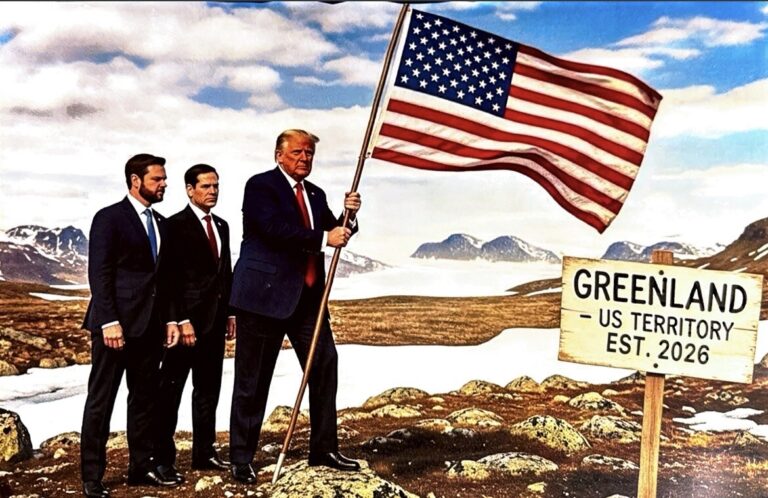
- Bruised hands, a stooped back, frequent dozing, rambling, and confusion—he once mistakenly called Greenland Iceland and conflated conflicts in South America and the Middle East.
- He turned eighty yesterday (the 15th).
- Though he walks cautiously, fearing falls, he climbed the 40 steps of the railing-less Great Hall of the People in China.
- Related Link.
Jensen Huang’s Japan Snub: “Risk of Falling Behind in the AI Revolution.”.
- Nikkei Shimbun analyzed, “Whether Japan can become a partner to leading companies like Nvidia in the AI revolution will determine the nation’s wealth.”
- Jensen Huang (Nvidia CEO) spent four days in South Korea and returned without visiting Japan.
- Taiwan and South Korea are core partners, but Japan is not. While Japan has many semiconductor equipment and wafer companies, few directly engage with Nvidia. Most are closer to TSMC’s supply chain.
‘Scapegoat’: The Media’s Transcendent Translation.
- President Lee Jae-myung (President) mentioned the possibility of judicial proceedings after leaving office in an interview with The Economist, saying, “The possibility is pretty high,” but did not use the term “scapegoat.”
- “The possibility of becoming a scapegoat is pretty high” is the media’s paraphrasing. Kim Jeong-woo (Head of Hankook Ilbo’s Issue 365) analyzed, “Regardless of the statement’s authenticity, the Blue House likely judged that framing Lee Jae-myung as a scapegoat wouldn’t hurt.” Ultimately, the analysis suggests the “goal is to cancel the indictment” and that it’s a “strategic move to rebuild a victim narrative and rally support.”
- “The real question isn’t whether to break the Blue House’s curse, but how. At least, self-pardoning isn’t the solution.”
- Related Link.
- Related Link.
Worth Reading.
Jeong Chyeong-rae’s Heyday Is Waning.
- Sung Han-yong (Senior Reporter, Hankyoreh) analyzes, “The Myeong-Cheong rivalry is a struggle between current power and future power. It is an enormous burden for both the president and the Democratic Party.”
- Lee Jae-myung (President) stating, “The ruling party must demonstrate responsibility, results, inclusivity, and unity with the power it has been given,” is effectively “shouting for Kim Min-seok to be chosen instead of Jeong Chyeong-rae,” according to the analysis.
- Party members reportedly say, “How desperate must the president be to say such things?” Will Jeong Chyeong-rae manage to hold on?
It’s Time to Move Beyond the Denuclearization Framework.
- Cheong Wook-sik (Representative, Peace Network) emphasized, “It is time to pursue peaceful coexistence not with a non-nuclear North Korea but with a nuclear-armed North Korea.”
- Paradoxically, the disappearance of U.S. preemptive strike rhetoric after North Korea’s nuclear armament is an inconvenient truth. Cheong added, “It’s uncomfortable and hard to accept, but denuclearization has reached its end,” stressing, “We must now find alternatives.”
- The solution? Instead of clinging to denuclearization, push for arms control negotiations aimed at freezing and reducing capabilities. Trump made a similar proposal.
- Related Link.
Justice Must Appear Just.
- Nothing is fair if it doesn’t appear fair. Lee Joon-ung (Professor, Seoul National University) emphasized, “The National Election Commission must administer elections fairly; this is nearly the entirety of its duty.”
- It’s like not asking a journalist about their intent or motive behind a story—they prove it with the article. The same applies to the Election Commission: it must earn fairness through results.
- “State institutions have an obligation to actively respond to citizens’ suspicions. They bear responsibility to appropriately address citizens’ ‘provocations.’ They must wisely counter demagoguery that undermines democratic legitimacy, even when strategically adopted by some citizens. Their response must be grounded in physical evidence, built on robust logical structures, and overwhelmingly persuasive.”
- Related Link.
Can We Live Without Working?
- Prospects also emerge that the era of radical abundance is near. Will democracy function in that era?
- Park Tae-woong (Chairman, Nokseo Forum) emphasized, “Public audits of algorithms, citizen participation in AI decision-making, public regulation of platform companies, and redesigning digital public spheres are necessary.” The argument is that “institutional safeguards are needed to prevent AI from bypassing or capturing democracy.”
- “We must preserve human dignity during this transition. Systemic shifts are harshest on those living through the transition. This is not just welfare policy—failure invites political backlash. (Omitted) If we can live without working, what should humans live for? This is not an economic question but a philosophical one.”