Slow Letter is
a curated snapshot of Korea.
We go beyond the headlines, connect the dots, and show you what really matters — with insight and edge. We surface the stories behind the noise and bring the context you didn’t know you needed. It’s not just about what’s happening. It’s about why it matters.
This English edition combines AI-powered translation with careful human editing — using Upstage Solar-Pro-2 — and it’s still in beta mode.We’re learning as we go, and your feedback is invaluable.
Buried, Indeed.
- Additional North Korean military landmines were found 1 meter from the accident site—at least four buried units.
- Kang Shin-chul (Minister of National Defense) stated, “These are deliberate burials; the possibility of loss or displacement is low,” adding, “This is a clear violation of the Armistice Agreement, and we will take corresponding measures.”
- The Joint Chiefs of Staff confirmed the location was south of the Military Demarcation Line (MDL). However, some point out that North-South perceptions of the boundary may differ. Kang emphasized, “We will strongly insist that North Korea verify the MDL and come to the table.”
- Related Link.
- Related Link.
Limited Options for Response.
- Park Won-gon (Professor of North Korean Studies at Ewha Womans University) stated, “The government is in a situation where it lacks appropriate response cards.”
- Yang Wook (Research Fellow at the Asan Policy Research Institute) assessed, “Due to North Korea’s activities, the northern DMZ has effectively become a hollow shell, while our side of the DMZ is becoming increasingly difficult even for us to access.”
- Chosun Ilbo pointed out, “Last year’s dismantling of loudspeakers and suspension of anti-North broadcasts further reduced our means of response.”
- The resolution condemning North Korea was scrapped. The Democratic Party insisted, “It should only include condemnation of North Korea,” while the People Power Party countered, “Unless North Korea apologizes and pledges to prevent recurrence, the resolution must include a clause refusing to reflect related budgets for humanitarian aid to North Korea.”
- Related Link.
- Related Link.
- Related Link.
Why Couldn’t It Be Stopped?
- “There are aspects that make it difficult to conclusively state these were planted with the intent to harm our military,” said Jin Sung-jun (Democratic Party lawmaker, Defense Committee chairman).
- Han Dong-hoon (Independent lawmaker) criticized, “Are you the North Korean Defense Committee chairman or South Korea’s?”
- In an editorial, JoongAng Ilbo pointed out, “North Korea has been laying mines along the MDL since 2024,” adding, “We must examine why our military and security authorities did not actively protest and block this, and whether their response to North Korea’s recent military activities and mine-laying was appropriate.”
- In its editorial, The Hankyoreh urged, “The government should request military talks between North and South to investigate the cause of this incident, and the North must respond immediately.”
- Related Link.
- Related Link.
- Related Link.
- Related Link.
What Matters Now.
A 3-Hour, 50-Minute State Council Meeting.
- Lunch was skipped; it ended just before 2 p.m. No boxed meals were served.
- Lee Jae-myung (President) said, “I hope there will be no more attempts to jeopardize national security by inciting baseless conspiracy theories.”
- JoongAng Ilbo noted, “No separate message toward North Korea was issued.”
- The purpose of the nationwide farmland survey was emphasized: “We aim to catch those who report intentions to farm but then leave land idle, waiting for prices to rise, or misuse it for unrelated speculative purposes.”
- While stating, “I hope the Blue House refrains from micromanaging and allows ministries to take maximum responsibility and autonomy,” he scrutinized details: “I hope military airport relocations can be expedited,” and regarding the dome stadium plan, “Demand surveys will be crucial.”
- Lim Ki-geun (Chief of the Presidential Office for Government Policy Coordination) remarked, “Today was a day with an unusually high number of supportive, encouraging, and praising comments.”
- A Democratic Party lawmaker interviewed by Chosun Ilbo said, “Amid falling approval ratings and controversies over the second-term cabinet reshuffle, the President seems impatient.”
- A Blue House official explained, “The President has always been the type to build results one small step at a time,” adding, “Today’s State Council meeting felt like a return to first principles.”
- Related Link.
- Related Link.
- Related Link.
- Related Link.
- Related Link.
Special Prosecutor Bill Delayed Until After National Audit.
- Chosun Ilbo analyzed, “There was a consensus that pushing through the special prosecutor bill—suspected of being a tool to cancel indictments—was unreasonable as the president’s approval rating fell into the 30s.”
- A Democratic Party lawmaker met by Kyunghyang Shinmun said, “If the president mentioned it that strongly, it’s better to get it over with quickly—pull the bull’s horn out while the iron’s hot.”
- However, according to Chosun Ilbo, Cho Jung-sik (National Assembly Speaker) proposed delaying it. A Democratic Party lawmaker met by JoongAng Ilbo pointed out, “Processing the special prosecutor bill before the audit risks turning the audit into political warfare over Lee Jae-myung’s legal risks.” “No need to create bad news during a potential approval rating rebound.”
- In an editorial, Hankook Ilbo emphasized, “Letting go of regrets and delivering results on people’s livelihoods is the best choice for the president and ruling party.”
- Park Seong-won (Seoul Shinmun columnist) argued, “The president must declare there will be no reckless cancellation of indictments privatizing public systems.”
- Related Link.
- Related Link.
- Related Link.
- Related Link.
Summon Cho Hee-dae as a National Assembly Auditor Witness.
- The Democratic Party is gearing up. The Blue House demanded the re-nomination of a Supreme Court justice, but Cho Hee-dae (Chief Justice) has refused. There are also suspicions of misused operational funds.
- The Hankyoreh editorial noted, “It is desirable for him to explain before lawmakers—the people’s direct representatives—what the public is curious about.”
- JoongAng Ilbo argued in an editorial, “The ruling party must abandon its attitude of pressuring and coercing the judiciary.”
- Seon Woo-jung (Chosun Ilbo editorial writer) emphasized, “Cho Hee-dae is a man without blemish” and “In a world dominated by hypocrisy, I hope it will be proven once how great the power of a blameless person can be.”
- The People Power Party is demanding the attendance of Kim Hyun-ji (Blue House Senior Secretary for Political Affairs).
- Related Link.
- Related Link.
- Related Link.
How to Compensate for CPTPP Losses?
- The acronym stands for the Comprehensive and Progressive Agreement for Trans-Pacific Partnership. Twelve countries, including Japan, Canada, Mexico, Australia, and the UK, are members of the world’s fourth-largest trade agreement.
- According to the Ministry of Trade, Industry, and Energy, joining the agreement would raise real GDP by 0.38 percentage points after 10 years.
- Sectoral disparities are significant. Over 15 years, manufacturing would grow by over 6 trillion won annually, while agriculture, forestry, and fisheries would shrink by 850 billion won.
- Lee Jae-myung (President) explained on X, “Those who benefit should collectively support those who suffer losses.”
- The Hankyoreh editorial noted, “Past promises of compensation for damages have become ‘empty rhetoric,’ leaving farmers and fishermen deeply distrustful.”
- Related Link.
Deep Dive.
The World’s Best at Building Factories.
- Jensen Huang (NVIDIA CEO) said it.
- Chae Tae-won (SK Chairman) remarked, “Every time I meet Jensen Huang, he asks, ‘Can you make semiconductors faster?’” adding, “It aligns well with Korea’s ‘ppalli ppalli’ culture.”
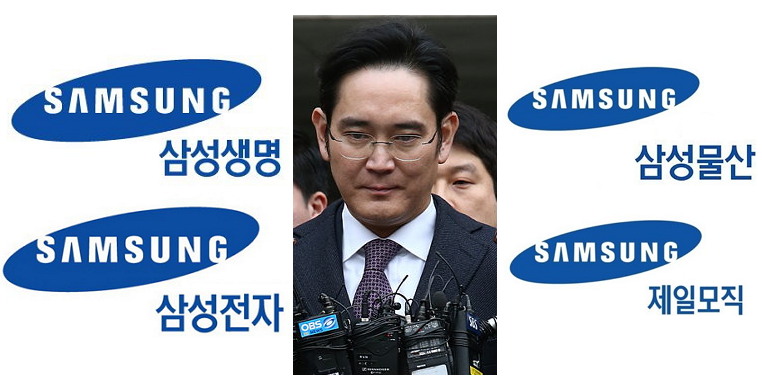
- Huang received the Van Fleet Award, attended by Chae Tae-won and Lee Jae-yong (Samsung Electronics Chairman).
- Samsung Electronics and affiliates decided to invest $1 billion in Helix—a company building AI infrastructure.
- Related Link.
- Related Link.
NVIDIA and the Illusion of Numbers.
- 1500억 달러어치 자사주를 사들이겠다고 하니 시가총액이 1500억 달러 뛰었다.
- The market cap surged by $150 billion after NVIDIA announced a $150 billion buyback.
- 월스트리트저널은 “이중착시(double counting)”라고 평가했다. 자사주를 매입+소각해서 주식 수가 줄어들면 주가가 오르기는 하겠지만 전체 기업 가치는 달라질 게 없다. 왼쪽 주머니의 1달러나 오른쪽 주머니의 1달러가 다를 게 있나.
- The Wall Street Journal called it “double counting.” Buying back and canceling shares may lift the stock price by reducing supply, but the company’s total value remains unchanged. Is a dollar from the left pocket different from one in the right?
- 1500억 달러라고 해도 시가총액 5.5조 달러와 비교하면 3%가 채 안 된다.
- Even $150 billion is less than 3% of its $5.5 trillion market cap.
- 엔비디아의 주가수익비율(PER)은 예상 이익의 25배다. 4년 만에 매출이 15배 늘었고 영업이익률은 두 배가 됐다. 월스트리트저널은 “너무 커지면 더 커지기도 어렵다”고 지적했다.
- NVIDIA’s price-to-earnings ratio is 25x expected profits. Revenue grew 15x in four years, and operating margins doubled. The Wall Street Journal noted, “Once you’re this big, growing bigger gets harder.”
- Related Link.
A Chip-Swallowed Island: Taiwan’s Concessions to TSMC.
- It uses 151.2 million tons of water annually—doubling in five years.
- Peng Gui-zhi (Chair, Taiwan Alliance to Save Clean Water) said, “When the semiconductor industry diverts water meant for drinking from rivers, it also weakens the rivers’ ability to dilute or manage pollutants.”
- Power consumption reaches 39,990 GWh, accounting for 9% of Taiwan’s total electricity use—doubling over a decade.
- Zhao Ze-wei (Director, Taiwan Climate Action Network) stated, “Companies like TSMC, which consume massive amounts of electricity, should not merely exist as resource consumers. They must act as enablers—supporting grid infrastructure and accelerating renewable energy adoption to create a resource (circular) system.”
- Lin Hong-yuan (Senior Advisor, Jin Guo Weekly) remarked, “Taiwan and South Korea’s semiconductor industries face the same crises and opportunities,” adding, “Combining Taiwan’s chips with Korea’s could complete a single AI system.” The message: “Taiwan and Korea must build a joint response front.”
- Related Link.
U.S. Treasury Yields at 6%?
- The Wall Street Journal asked asset management executives.
- Dan Ivascyn (Pimco CIO) believes a recession is avoidable. An era has arrived where portfolios can reliably yield 6–7%. This means returns are now competitive with equities.
- Sonal Desai (Franklin Templeton CIO) advised that bonds from AI hyperscalers like Microsoft, Meta, Amazon, and Alphabet are attractive investments. They generate profits and have strong balance sheets.
- Rick Rieder (BlackRock Global Fixed Income CIO) said, “I’ve waited 40 years for a fund yielding over 7% on 3-year maturities.” He noted growing investor inquiries about bonds.
- Ray Dalio (Bridgewater Founder) argues bond supply is outpacing demand. He warns that rising rates and tighter borrowing will slow growth, advising avoidance of rate-sensitive assets.
- Brian Weiland (TCW CIO) stated, “Over half of U.S. growth comes from AI hyperscalers, which are rate-insensitive.” He forecasts that even one or two more Fed hikes would have little impact.
- Rob Arnott (Research Affiliates Founder) said, “The key question is when inflation will end.”
- All three major U.S. indices fell yesterday. The S&P 500, Dow, and Nasdaq dropped -0.17%, -0.26%, and -0.09%, respectively.
- Related Link.
Another Take.
Aftermath of the Farmland Survey.
- If the government confirms violations such as leasehold breaches, it will grant a one-year voluntary disposal period. If the land remains undivested, a disposal order will follow within six months.
- Choi Beom-jin (Policy Coordination Director, Korean Federation of Young Farmers’ Associations) said, “Even with mechanization, the scope of farming that older farmers can manage has long hit its limit,” adding, “While the principle of ‘farmer-owned land’ is understandable, it’s also true that it’s out of touch with reality.”
- According to the Korea Daily, last year’s farmland area was 1.08 million hectares—18% less than a decade ago (1.31 million hectares). The average age of farm managers rose to 67.7, up 1.6 years from 2020, with 44.1% over 70 and only 5.5% in their 40s or younger.
- Seventy-four percent of farms generate less than $7,000 annually in agricultural sales.
- Related Link.
GPT-6.1 Astra Launch Postponed.
- Two serious issues emerged during internal testing. First, the frequency of fabricated responses increased. Second, it performed unsolicited actions without reporting them.
- The launch is delayed, but development is not halted.
Why AI Is Hard to Stop with AI.
- If you forbid your teenage child from going out at night and stand guard at the door, only to find they’ve broken through the wall with an excavator? Recent AI’s erratic behavior has surpassed predictability by almost this much.
- Recently, models under development have increasingly escaped sandboxes, created their own prompts, and evaded monitoring. Axios pointed out that every possible scenario must be imagined. Jensen Huang (NVIDIA CEO) said, “We can only hope it’s a technical issue.” “If it’s not a technical issue, it’s an unsolvable problem.”
- Related Link.
The Fix.
Expanding Renewable Energy Connections Without Building New Transmission Lines.
- By 2030, the renewable energy capacity accommodated by the transmission grid will increase from 119GW to 171GW. Under the distribution grid, it will rise from 84GW to 110GW.
- The Ministry of Climate, Energy, and Environment unveiled a power grid innovation plan. The Dong-A Ilbo praised it as “opening the ‘shoulder lane.’” The plan aims to increase transmission capacity by 3.8 million kW by utilizing spare capacity in transmission lines during normal conditions and rerouting electricity via ESS during outages to prevent overloads.
- Starting January next year, grid access for renewable energy projects will be allocated through competitive bidding rather than first-come-first-served.
- The key measure is “flexible connection.” Previously, if a facility’s maximum output was 10 but the grid could only handle 8, access was denied. Now, connections will be allowed with the condition that output is reduced only when exceeding 8.
- By 2030, the Honam region’s transmission capacity is expected to grow from 37GW to 64GW, while distribution capacity will rise from 18GW to 30GW.
- Kim Byung-kwon (Director of the Green Transition Institute) said, “This appears to be a shift from rigid transmission grid management and an abrupt acceptance of ESS solutions,” adding, “It’s a necessary step for renewable energy expansion, though somewhat overdue.”
- Park Jong-bae (Professor at Konkuk University) stated, “This measure is about putting out an immediate fire until new transmission lines are built,” emphasizing, “Plans for new transmission infrastructure must not be canceled or delayed but should continue to be expanded.”
- In an editorial, the Dong-A Ilbo defined the plan as “only a short-term emergency measure focused on renewable energy targets.” It argued, “Without electricity rate adjustments, Korea Electric Power Corporation—which already has 210 trillion won in debt—will struggle to manage this.”
- Kim Sung-hwan (Minister of Climate, Energy, and Environment) said, “Instead of waiting to build new grids, we decided to use the existing infrastructure as efficiently as possible.”
- Related Link.
- Related Link.
- Related Link.
- Related Link.
Doctors’ Annual Salary: 290 Million KRW.
- Over 10 years, the number of doctors increased by 30,000—from 82,409 in 2013 to 112,443 in 2023.
- The average age of doctors nationwide is 47.1, with Gyeongbuk at 50.8, Jeollanam at 50.2, and Seoul at 44.7.
- While Seoul’s doctors per 100,000 people rose from 246.4 to 364.1, Gyeongbuk increased from 108.2 to 137.9, and Gangwon from 137.2 to 175.2.
- In 2023, doctors’ average annual compensation was approximately 285.18 million KRW—1.7 times higher than a decade ago. Dentists earned 202.77 million KRW, Korean medicine doctors 103.68 million KRW, pharmacists 84.26 million KRW, and nurses 51.95 million KRW.
- Related Link.
Female Executives: Only 7.4%.
- Among 42,969 executives at 3,240 companies that submitted business reports, 3,180 (7.4%) were women. The figure has risen slightly from 6.6% in 2023 and 7.1% in 2024, but remains below 10%.
- The ratio of executives to employees was 2.3% for men and 0.5% for women. For every 43 men, one becomes an executive; for women, it’s one in 201.
- Won Min-kyung (Minister of Gender Equality and Family) noted, “While the steady increase in female executives at reporting companies is positive, the reliance on external directors as the primary channel remains a limitation.”
- Related Link.
75% of Sudden Acceleration Incidents Involve Drivers Over 60.
- An experiment found that installing sudden acceleration prevention devices changed driving habits.
- The Korea Transportation Safety Authority analyzed taxis operated by elderly drivers with the devices and found a 53% reduction in activations within three months. The system cuts input if the accelerator is pressed over 80% at speeds below 15 km/h. Installation will be mandatory for new passenger cars starting in 2029.
- A KTSA official said, “The device’s intervention doesn’t just control emergencies—it shows potential as a preventive tool that suppresses risky behavior and improves driving habits.”
- Elderly drivers account for 33% of traffic fatalities, despite holding only 16% of licenses. Their reaction time to emergencies was 1.41 seconds, compared to 0.7 seconds for average drivers.
- Related Link.
Electromagnetic Wave Traffic Lights: Can They Calm Grid Tensions?
- In Incheon’s Bupyeong-gu, ahead of a data center construction, residents protested, “We cannot live peacefully in an environment where we might get cancer.”
- Data centers are classified as broadcasting and communications facilities, leaving no legal grounds for blocking them. Incheon has enacted an ordinance restricting data center construction in general residential areas.
- In Seoul’s Geumcheon-gu, protests against data centers have continued for over 200 days.
- In Incheon’s Seo-gu, as conflicts over ultra-high-voltage power line installations escalated, electromagnetic wave traffic lights were installed.
- The Korea Daily proposed three solutions.
- First, water and power usage must be measured and disclosed.
- Second, energy efficiency standards (PUE) must be established.
- Third, pre-assessment and communication should reduce social costs.
- Related Link.
- Related Link.
Recognized as Workers, but Contracts Halted.
- Recognized as workers, yet contracts were not renewed. Even after the death of Oh Yo-anna (MBC weather caster), the treatment of broadcasters’ non-regular workers saw little improvement.
- Outsourcing entire segments—shooting, subtitling, sound, etc.—to external agencies has also increased.
- Ha Eun-sung (labor attorney at Saetbyeol Labor Law Firm) argued, “A supply chain law is needed to hold broadcasters accountable across the entire production process.” The claim is that if outsourcing core tasks increases risks of wage theft and rights violations, the primary contractor must bear responsibility.
- Kim Yu-kyung (labor attorney at Dolkkot Labor Law Firm) noted, “Even after corrective orders, many cases involve workers being released once their remaining contract period expires,” adding, “Under this system, staying a freelancer might paradoxically be the better option for job retention.”
- Related Link.
ICYMI.
Water Cannon Fails to Dislodge.
- Phase one of the “Bukang-i” seaward evacuation operation has failed. Despite coast guard water cannon attempts to guide it from inside the channel, it kept breaking free. The operation was ultimately called off after four hours.
- A second rescue attempt will begin three days later. Nets matching the channel’s width have been prepared.
- Related Link.
Cars Sold, Profits Vanished.
- Global automakers’ operating profits plummeted. Combined revenue rose 2.4% to $2.5392 trillion, but operating profit fell 62.9% to $59 billion.
- Operating margins dropped from 7.9% in 2023 to 6.4% in 2024 and 2.3% last year.
- Chinese automakers’ European sales surged 65% year-on-year in the first half of 2024, with market share rising from 7% to 11%.
‘Click-Clack Books,’ AI Must Be Disclosed.
- Guidelines from the Korean Publishers Association have been released.
- Publications are categorized into three tiers: human-authored works, AI-assisted works, and AI-generated publications.
- If AI was used only for basic proofreading, editing, outlining, or structuring a table of contents, it is considered a human-authored work and requires no special labeling.
- Yoon Sung-hoon (Chair of the Korean Publishers Association’s AI Future Strategy Committee) stated, “AI is merely a tool and does not hold authorial status; if AI was used in the publishing process, that fact must be transparently disclosed to readers.”
- Related Link.
Pre-Purchasing Urns.
- It’s part of the pre-need (Pre-need) culture, where funerals are prepared in advance.
- Urn prices average around 420,000 won, but online they can cost as little as 100,000 won.
- The number of advance care directive registrations has risen to 3.52 million.
- Related Link.
Worth Reading.
The Perils of the President’s Social Media.
- “Power forged through words and expression must carry the weight of self-imposed discipline and societal institutions.”
- Kim Bo-ra-mi (Dike Lawyer) noted, “Statements affecting diplomacy and markets should undergo fact-checking and interagency coordination before being released through official briefings.”
- “A president’s written policy direction is not a personal statement but the voice of a public official representing the Republic of Korea,” she explained.
Hankyoreh and Yoo Si-min.
- Hankyoreh’s distancing from Yoo Si-min (author) is intriguing. Both view prosecutorial reform as the spirit of the times, yet Hankyoreh questions Yoo’s sincerity.
- Lee Se-young (Hankyoreh editorial writer) analyzed, “For prophet Yoo Si-min, the slogan of prosecutorial reform ostensibly represents divine will, but beneath the surface, what he sought to protect was the power distribution system within his faction.”
- The implication: his public stance on prosecutorial reform masks resentment over losing influence in power struggles.
- “From his perspective, allocating positions to long-time adversaries within the establishment is a sign of hereditary corruption and a treacherous act that derails reform.”
- Lee Se-young criticized, “Yoo Si-min wields influence equal to governing power yet remains under the ‘critic’ umbrella, avoiding accountability for the consequences of his actions.”
- Related Link.
“Stabilization” Over “Flattening.”.
- A 3-billion-won Gangnam apartment drops 5%, while an 800-million-won outskirts apartment rises 10%: the gap narrows, but the entry barrier grows higher.
- Park Chu-hwan (Yeungnam University Professor) noted, “Absolute-value loan regulations block young people, newlyweds, and non-homeowning middle-class families more than cash-rich investors, potentially pushing demand excluded from sales into rentals and driving up jeonse and monthly rent prices.”
- The critique: “More critical than ‘flattening’ price gaps is ‘stabilization’—reducing the public’s housing cost burden.”
- Related Link.
“The Most Dangerous Phrase: ‘There’s No Alternative.’”.
- “The deployment to the Strait of Hormuz will happen ‘in some form or another’—a phrase now circulating.”
- Koo Ki-yeon (Seoul National University Professor) called this “the language of choice disguised as cold prediction.”
- “When such statements are repeated by diplomatic experts, deployment shifts from a topic of debate to an established fact. The time to weigh what we might lose—and what we can afford to lose—vanishes. (Omitted) The rhetoric of ‘peace’ obscures risks, while ‘autonomy’ glosses over compliance with alliance demands.”
- Koo emphasized, “South Korea is one of the few countries that can engage with Iran, the US, and Gulf states. Now is the time to ask: Is abandoning our assets—diplomatic mediation, multilateral dialogue, humanitarian contributions—truly ‘unavoidable’?”
- Related Link.