Slow Letter is
a curated snapshot of Korea.
We go beyond the headlines, connect the dots, and show you what really matters — with insight and edge. We surface the stories behind the noise and bring the context you didn’t know you needed. It’s not just about what’s happening. It’s about why it matters.
This English edition combines AI-powered translation with careful human editing — using Upstage Solar-Pro-2 — and it’s still in beta mode.We’re learning as we go, and your feedback is invaluable.
The Kospi 7,000 Era.
- It has surged 75% this year.
- It broke 4,000 on October 27 last year, pierced 5,000 on January 27 this year, and smashed 6,000 on February 25.
- The S&P 500 rose only 6%. Taiwan’s Taiex index at 42% is second.
- Semiconductors are the engine. Samsung Electronics and SK Hynix now rank 11th and 15th globally by market cap. The two stocks account for nearly 48% of the Kospi market.
- Foreign investors led the market. They made net purchases of 3.0 trillion won and 3.1 trillion won on the 4th and 6th, respectively.
- Individual investors net-sold 15.5 trillion won over the past month.
What Matters Now.
There’s Room to Rise Further.
- Corporate earnings are strong to begin with.
- The consensus operating profit for 335 Kospi-listed companies this year is 810 trillion won. This is 55% higher than the forecast from three months ago. The 12-month forward PER (price-to-earnings ratio) stands at 7x.
- Samsung Electronics (Chairman Lee Jae-yong) and SK Hynix (CEO Lee Seok-hee) have seen their PERs drop to 5x based on this year’s expected earnings. That means they’re still undervalued relative to performance. Nvidia’s PER, by comparison, is around 25x.
- The term “rally with no ceiling” is emerging. Foreign investors have returned, and ETF investments have surged. Retirement pensions keep flowing in.
- Shinhan Investment & Securities raised its target index to 8,600 points.
- If next month’s inclusion in Morgan Stanley’s developed-nations index is confirmed, some forecasts suggest the index could surpass 10,000 and even reach 15,000.
Nasdaq Soars.
- All three major indices rose. It’s a second consecutive all-time high.
- The S&P 500, Dow, and Nasdaq gained 1.46%, 1.24%, and 2.02%, respectively.
- CPU-related stocks like Intel and AMD led the market. Speculation about rising AI infrastructure demand bolstered optimism.
- South Korea’s stock market may also break its record high today.
- Related Link.
200 Gainers, 679 Losers.
- Not every stock is rising. A K-shaped polarization is emerging in the stock market.
- Lee Jung-hwan (Hanyang University professor) warned, “We must not mistake the Kospi’s record-breaking run for a broad-based economic upswing.”
- While foreign investors’ direct access to the Korean stock market will likely sustain inflows for now, concerns persist that some stocks—beyond Samsung Electronics and SK Hynix—are overvalued. The possibility of profit-taking after short-term surges must also be considered.
- Related Link.
Will a U.S.-Iran Agreement Be Drafted?
- Oil prices plummeted and stocks surged after news that Iran is positively reviewing a U.S. proposal.
- The one-page draft agreement includes Iran temporarily halting nuclear enrichment. The U.S. proposes lifting economic sanctions on Iran. The single-page length suggests significant narrowing of key issues.
- Trump warned on Truth Social, “If they don’t agree, airstrikes will begin—and their scale and intensity will be far greater than before.”
- Related Link.
- Related Link.
- Related Link.
Trump’s Unfamiliar Negotiating Counterpart.
- Trump’s style is to drive deals through aggressive pressure.
- Iran, however, prides itself on enduring blows and dragging out negotiations. The New York Times assessed, “While Trump is impulsive and erratic, Iran’s leadership is stubborn and tenacious.”
- Related Link.
Deep Dive.
“Constitutional Amendment Opponents Are Defenders of Illegal Martial Law.”.
- Lee Jae-myung (President) said this.
- Today, the National Assembly votes on the constitutional amendment. Twelve defectors from the People Power Party are needed.
Special Prosecutor Bill for Manipulation Indictment Postponed Until After Elections.
- The Democratic Party has instructed lawmakers to hold their tongues during a general meeting. They have stepped back from their plan to process the bill within this month.
- The Korean Law Professors Association issued a statement criticizing, “The clause to cancel indictments destroys the principles of rule of law and separation of powers.”
Inflation at 2.6%: May Will Be Worse.
- Diesel and gasoline prices surged 30.8% and 21.1%, respectively.
- Rice, imported beef, and mackerel rose 14.4%, 7.1%, and 6.3%, respectively.
- The oil price cap helped reduce the inflation rate by 1.2 percentage points.
- Airfares will climb further. Domestic flight fuel surcharges were 7,700 won in April but jumped to 34,100 won in May.
KOSPI Effect, Exchange Rate Drops.
- 1,455.1 won. Thanks to increased supply as foreign investment flowed in.
- Moon Da-un (Korea Investment & Securities analyst) projected, “We expect a high-opening, low-closing trajectory.” Growth rates are strong, and the likelihood of interest rate hikes is significant.
Another Take.
“No Need to Review Troops Deployment to Iran.”.
- Satung Seok (Director of the National Security Office) said this. The situation changed after Trump halted Project Freedom.
- The cause of the Korean cargo ship fire remains undisclosed. The Iranian government responded to South Korea’s request with, “We have no knowledge of this.”
National Pension Fund Surpasses 1,700 Trillion Won.
- The fund grew by over 250 trillion won in four months from 1,472 trillion won at the end of last year.
- Last year’s fund return rate was 18.8%. The fund earned 260 trillion won in profits last year—it took just four months to match that amount.
- Korean equities account for 25% of the fund, valued at around 400 trillion won. The Fund Management Committee is considering increasing the proportion of Korean equities.
- Related Link.
North Korea’s Dual-State Constitutional Revision.
- It specifies the Democratic People’s Republic of Korea as governing the northern half of the Korean Peninsula. No explicit boundary was defined.
- References to unification or “same ethnicity” were omitted. Achievements of Kim Il-sung and Kim Jong-il were removed, defining Kim Jong-un (State Affairs Commission Chairman) as the head of state.
- The term “hostile” was also deleted.
- Im Eun-chul (professor at Kyungnam University) analyzed, “It strengthened the character of a normal state constitution.”
Coupang’s Turnaround? First Quarterly Loss in Seven Quarters.
- Coupang recorded an operating loss of $240 million in Q1.
- Active users decreased from 24.6 million in Q4 last year to 23.9 million.
Over 1.4 Million Koreans Taking 10+ Medications.
- 82% are aged 65 or older.
- Health issues like kidney dysfunction are concerns, but rising medical costs are a growing burden. By 2025, health insurance drug expenses will reach 27.6 trillion won, accounting for 24% of total medical costs.
- Kang Jae-heon (Kangbuk Samsung Hospital professor) emphasized, “We must establish a primary care physician system for the elderly.” Mandatory DUR (Drug Utilization Review) checks for all prescriptions are also needed.
The Fix.
A 600 Billion Won National Growth Fund.
- The government covers up to 20% of losses.
- Over 60% of the fund will be invested in advanced strategic industries like AI and semiconductors.
- Investors can receive income tax deductions of up to 1.8 million won. This is a 5-year term product—once subscribed, it cannot be canceled.
Seoul’s Fine Dust Reduced by 47%.
- Ultrafine particle concentration dropped from 30㎍/㎥ in 2006 to 18㎍/㎥ last year.
- Fine dust concentration also fell from 60㎍/㎥ to 32㎍/㎥.
- This reflects the success of diesel phase-out for city buses. Since 2006, 8,900 diesel buses were replaced with CNG and eco-friendly models. As of late last year, 23% of Seoul’s city buses are electric.
- Related Link.
ICYMI.
Reverse Turing Test.
- Tests that distinguish humans from robots are called Turing Tests.
- These days, proving you’re human is more critical. To avoid being mistaken for AI-generated content, there are a few details to watch.
- AI-written text often feels rhythmically disjointed. Phrases like “not A, but B” appear frequently. Even human-written text can be flagged by AI detectors—possibly because we unconsciously mimic AI’s style.
- Sudden verbosity or dumping academic-style posts on social media might invite unwarranted suspicion.
- Related Link.
Robot Umpires Increase Walk Rates.
- Human umpires tend to generously call borderline pitches as strikes.
- Robot umpires declare a ball if the pitch deviates by even 0.1 inches.
- The rise in walks to 9.5% in Major League Baseball this year—a 70-year high—is attributed to robot umpires. The average is around 8.5%.
- Fewer strikes have led to fewer swings: 46.6% this year, down from 47.6% last year. Batters are being more selective.
- Pitched strikes have also decreased, from 50.7% last year to 47.3% this year.
- Game times have lengthened, from an average of 2 hours 38 minutes to 2 hours 41 minutes per nine innings.
- Related Link.
Worth Reading.
Jeong Cheong-rae Is Not Your “Oppa.”.
- “Oppa—a gendered role forced by men onto women in patriarchal societies, a term that demands a privately intimate relationship.”
- Kwon Kim-hyeon-young (director of the Women’s Reality Research Institute) argued that this third definition of “oppa” should be included in the Korean dictionary.
- Kim Hye-jeong (director of the Korean Sexual Violence Counseling Center) condemned “the ruling party leader’s habitual, male-centric language” and demanded, “Stop treating female citizens as second-class citizens.”
- Related Link.
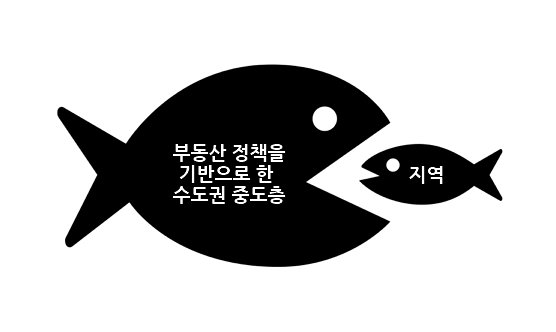
The Korea National University of Arts Controversy Reveals Regional Desperation.
- Just as a few factories won’t revive a region, sending down one university won’t revive a cultural industry.
- The essence of the issue lies in the critics’ argument. Jo Gwi-dong (economic columnist) pointed out, “Regions are dying because conditions don’t allow high-value service industries like cultural sectors to grow.”
- “Even one or two hubs would suffice. Create conditions where highly skilled, high-functioning talent can gather and live, and let new industries grow in a virtuous cycle based on their human capital.”
- “Condemning ‘regional greed and folly’ is just another form of Seoul-centrism.”
- Related Link.
Five Lessons from the U.S.-Iran Conflict.
- First, nuclear and renewable energy are rising. China, leading in renewable energy, is the biggest beneficiary.
- Second, the nature of war has changed. Data has become critical.
- Third, energy and supply chains are security. Dependence on external sources must be reduced. Connecting power grids with Japan and even China could be considered.
- Fourth, A World Minus Two. It’s time to discuss new rules without the U.S. and China.
- Fifth, fiscal policy matters. If interest rates can’t curb inflation, money must be injected.
- Lee Ho-seung (former Blue House Policy Director) emphasized, “Nothing is naturally guaranteed.”
- Related Link.
Three Criteria for Wartime Operational Control Transition.
- First, does South Korea have the capability to lead ROK-US combined forces?
- Second, does it have the capability to counter North Korean nuclear threats?
- Third, is the regional environment around the Korean Peninsula suitable for South Korea to exercise operational control independently?
- Transitioning wartime operational control does not mean asking USFK to leave. After all, USFK remains stationed because the US needs it.
- Ahn Hong-wook (Kyunghyang Shinmun columnist) emphasized, “The government must sufficiently explain to the public: what is South Korea’s objective security situation, what is lacking, and how to address those gaps.”
- Related Link.
Let the Jury Decide on Dropping Charges.
- Hankyoreh has published many articles and columns supporting the dismissal of charges. Park Yong-hyun (Hankyoreh columnist) pointed out, “Even the facts already revealed should have caused a major scandal—it’s only normal.”
- “Extraordinary measures are needed, a special prosecutor’s investigation is inevitable, and charges must be dropped,” the argument goes.
- In response to counterarguments insisting, “Let the trial proceed,” they retorted, “This would institutionally legitimize a fabricated indictment.” The logic: since the indictment is clearly fabricated, no trial is necessary.
- Park Yong-hyun argued, “Ordinary citizens—not judges or prosecutors—are best at recognizing what constitutes an unjust political prosecution.”
- Related Link.
Lee Jae-myung Might Feel Wronged.
- Yang Sang-hoon (Chosun Ilbo editor-in-chief) analyzes:
- The North Korea remittance case still leaves several puzzles. Apart from the prosecution’s alleged fabricated indictment, it is highly likely that Lee Hwa-young (then Gyeonggi Province vice governor) was indeed involved in the remittance. Her guilt has already been finalized in court. Whether Lee Jae-myung (then Gyeonggi Governor) knew the extent remains unconfirmed.
- Yang said, “I think Lee Jae-myung might genuinely feel wronged,” adding, “Even if he knew, the inter-Korean visit wasn’t for personal greed, and sending money to North Korea for visits was common in the past.”
- Yang advised, “If he declares a halt to pursuing dismissal of charges during his term and focuses solely on state affairs—like stock market recovery and real estate stabilization—while striving for national unity, public perception might shift.”
- The argument is that, regardless of perceived injustice, a special prosecutor cannot simply ‘shake off’ the case; ultimately, the court must decide.
- Related Link.
Non-Substitutability as the Keyword.
- “South Korea’s semiconductor-AI strategy should not be about ‘making everything’ but about conveying the message, ‘without us, it cannot be completed.’”
- This is the proposal of Kwon Seok-joon (Sungkyunkwan University professor). “Non-substitutability is the true meaning of technological sovereignty.”
- Supply chain stability must be secured and linked to regional security. AI governance and global standards must also be led by South Korea.
- “Beyond pursuing economic benefits from exporting a ‘Korean-style model,’ we must establish a common solidarity base for middle powers to compete against China,” the proposal suggests.
- Related Link.
South Korea’s Foreign Ministry Should Be Ashamed.
- Spain has recognized Palestine as a state and reopened its embassy.
- What about South Korea? It suspended the passport of a civic activist (Haemcho) on their way to deliver relief supplies to Palestine.
- Information (writer) demanded, “The South Korean government, which inherited the legacy of the Provisional Government of the Republic of Korea established through the March 1st Movement, should reflect on the meaning of the appeal for Palestine’s freedom.”
- Related Link.
Feedback.
Industrial Competitiveness Does Not Equally Mean Hegemony.
- Subscriber feedback related to the Hankyoreh column introduced in yesterday’s Slowletter:
- “While China may surpass the U.S. in electricity-based manufacturing or create global dependencies in that sector, this does not mean it has the ability to replace the U.S.-centric hegemonic order.
- A hegemon is not merely a nation that produces the most, but one that can organize a global market to absorb its output, along with payment, financial, and security systems. Even if China achieves overwhelming manufacturing capabilities, if countries worldwide perceive its excess supply as a threat and respond accordingly, it can become a production-dependent nation but not a hegemon with global consent.
- Moreover, U.S. hegemony was an order that enabled manufacturing growth in Germany, Japan, and South Korea, but Chinese manufacturing hegemony may be seen as a threat to their industrial bases. This difference is why China struggles to replace U.S.-style hegemony.
- Thus, interpreting China’s manufacturing dominance as a sign of hegemonic transition reflects the limitation of reducing hegemony to industrial competitiveness. While China’s rise in manufacturing may strongly challenge U.S. hegemony, it does not prove that Beijing can become a stable hegemon replacing Washington.”
- Related Link.